
Discover the real-world tasks in practical business analysis, the critical difference between gathering and analysis, and the 8-step framework for solving business problems.

On every successful project, you’ll find a business analyst. They might not have the formal title, but they are the ones ensuring the right problem is being solved and that everyone is on the same page about the solution. Business analysis isn’t just a set of tasks; it’s a mindset of creating order out of chaos and alignment out of disagreement.
The real-world role of a business analyst
In the real world, a business analyst (BA) is a leader from the inside out. They don’t just “document” what they are told; they create positive change for the organizations they serve. The core mission of a BA is to provide clarity in the face of ambiguity and to guide teams toward a shared understanding of project scope and business objectives.
The value of a dedicated BA role on a project has a tremendous return on investment (ROI). By reducing requirements churn-the time wasted by stakeholders in getting clear on what they want-and identifying more cost-effective solutions early, BAs prevent the expensive rework that often sinks projects late in the development cycle.
Requirements gathering vs. requirements analysis
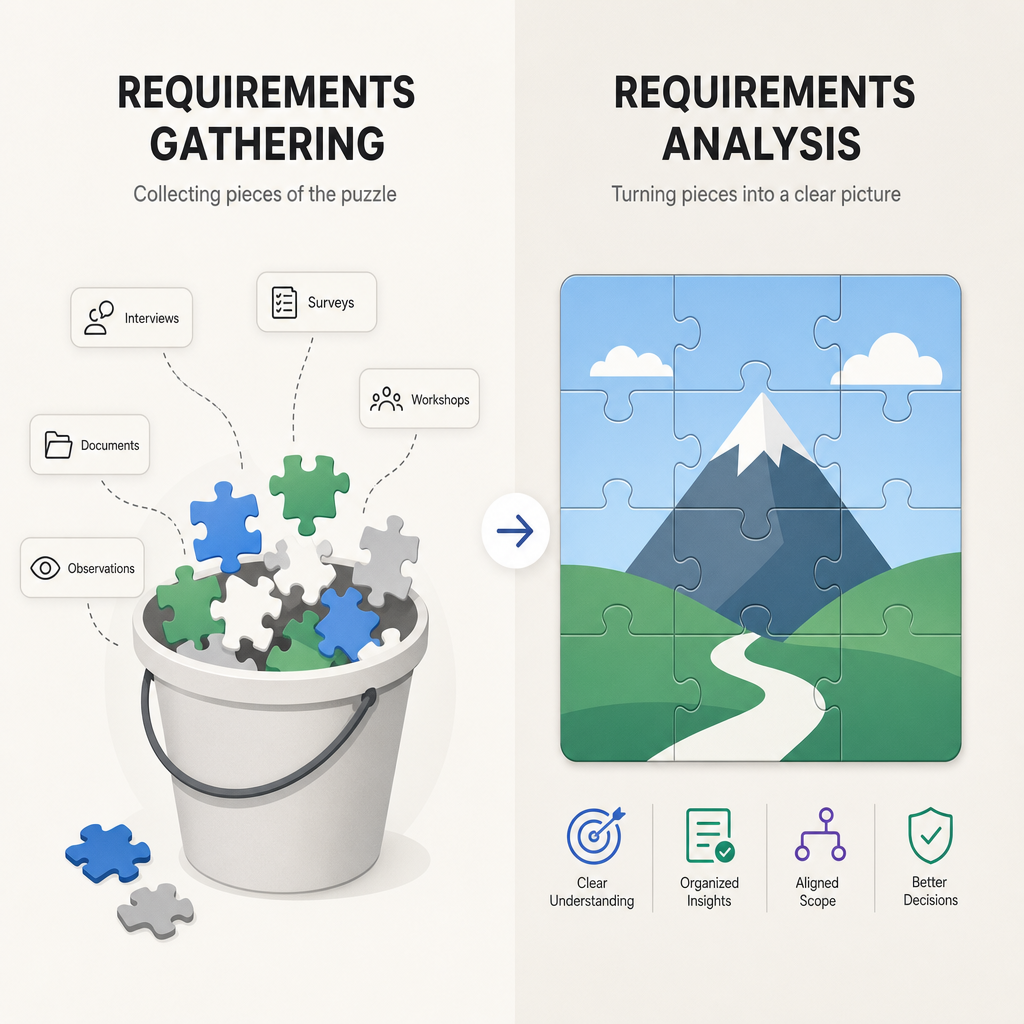
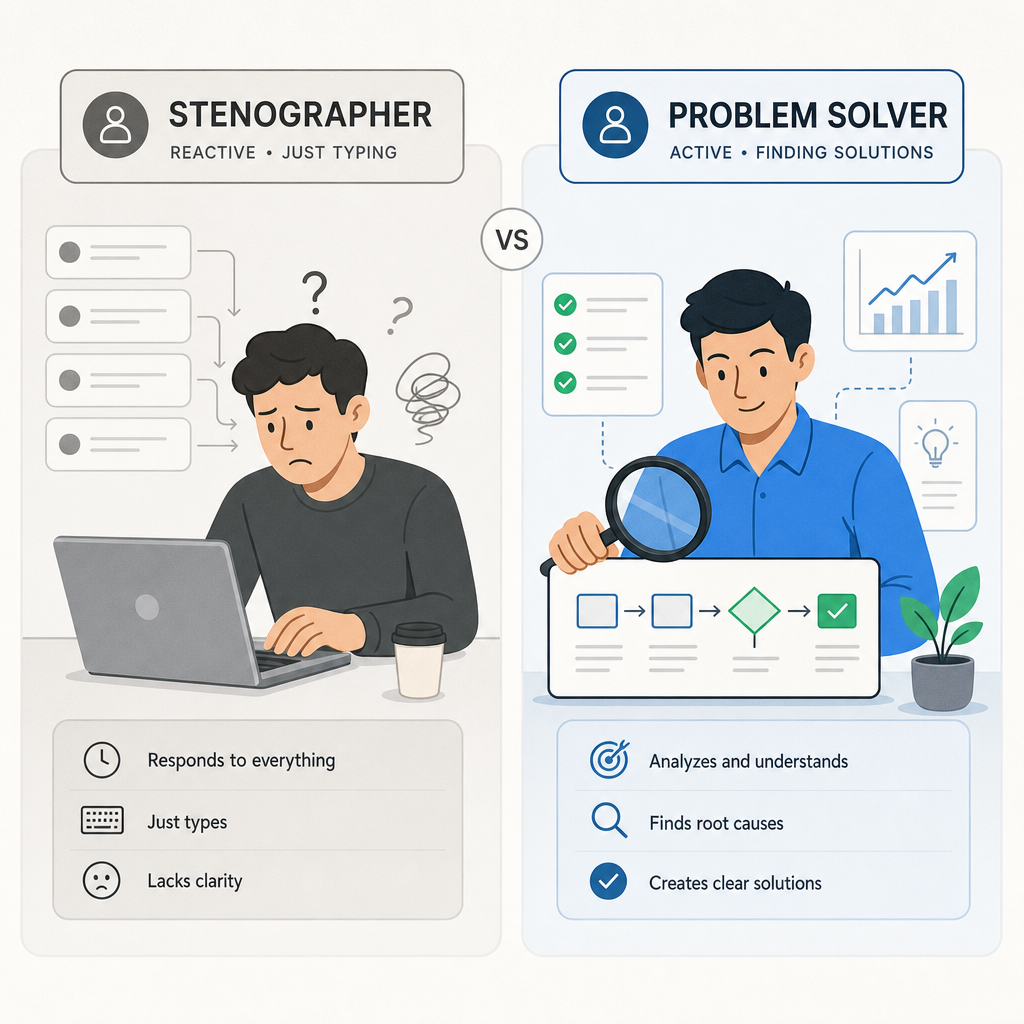
One of the most significant “real world” traps for a business analyst is the “stenographer” role. This occurs when a BA focuses solely on requirements gathering without performing analysis.
Requirements gathering (or elicitation) is the process of bringing together information from disparate sources. It involves drawing out what is latent or potential in a stakeholder’s mind. However, requirements don’t just sit around waiting to be picked up. They must be discovered through active inquiry.
Requirements analysis, on the other hand, is the critical thinking work. It’s where you identify contradictions, fill in gaps, and ensure that the solution actually delivers on the business case. While job postings often list “requirements gathering” ten times more frequently than “elicitation,” employers truly expect the skills of an analyst who can transform raw data into actionable specifications.
The 8-step business analysis process framework
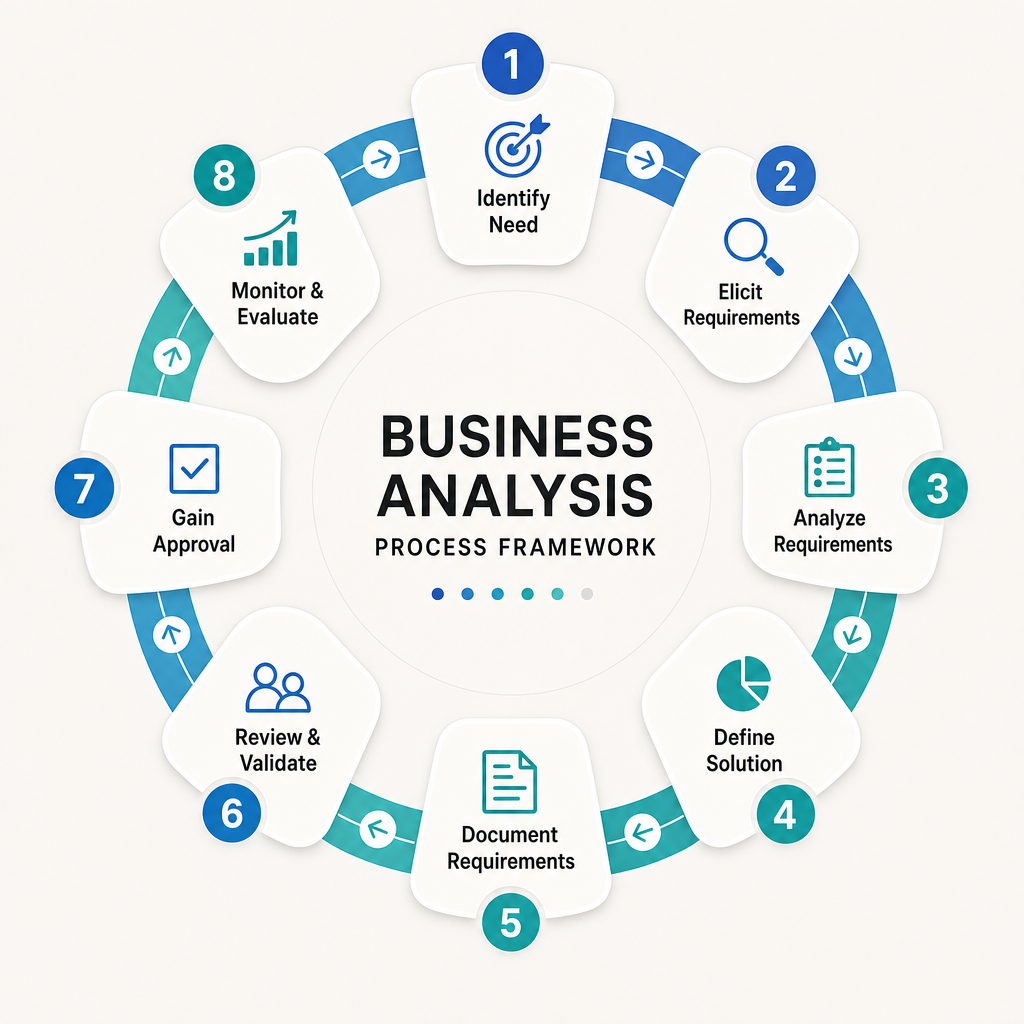
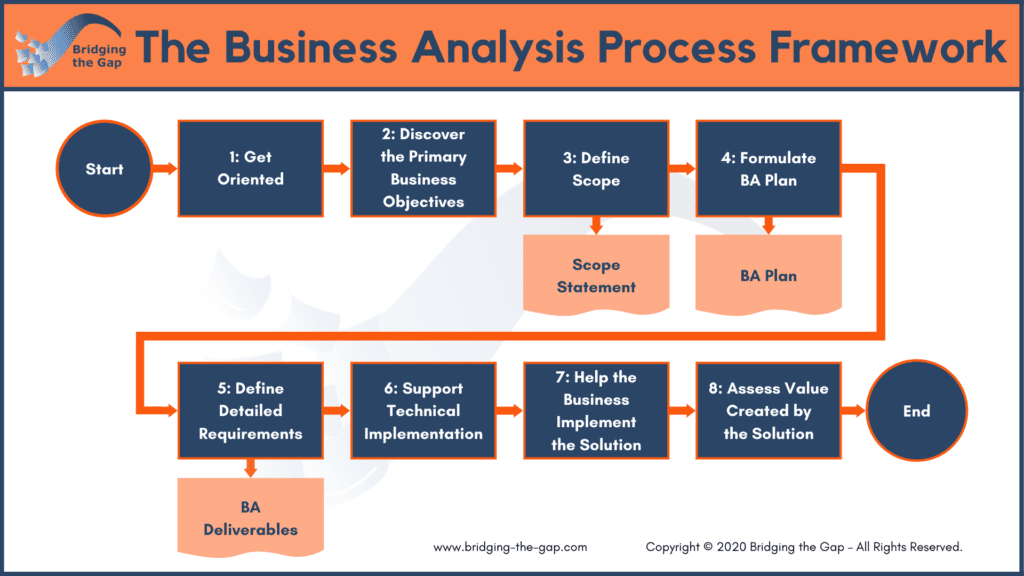
To move from chaos to a successful implementation, Bridging the Gap teaches a structured 8-step business analysis process framework. This framework is both structured and flexible, designed to provide BAs with a steady path to follow even on the most complex projects.
Step 1: Get oriented
The first step is about managing expectations. BAs often face pressure to dive into detailed requirements immediately, but taking a few hours or days to clarify roles and understand project history ensures you are moving in the right direction.
Step 2: Discover business objectives
Uncovering the “why” behind a project is the quickest path to success. Getting agreement on business needs before scope is defined prevents you from delivering a solution that solves the wrong problem.
Step 3: Define scope
Scope makes the business needs tangible. It defines the solution approach and determines the extent of changes to be made to business processes and technology.
Step 4: Formulate the BA plan
A credible plan answers what needs to be done and when. In the absence of a plan, unrealistic expectations are often defined for you by external stakeholders.
Step 5: Define detailed requirements
This is where scope becomes implementable. BAs elicit information, analyze it, and create deliverables that both business and technology stakeholders can validate.
Step 6: Support technical implementation
During development, the BA acts as a partner to the tech team, reviewing solution designs to ensure they fulfill all requirements and managing any necessary changes.
Step 7: Help the business implement the solution
A solution is only successful if it is used. BAs support the business during user acceptance testing (UAT) and rollout, ensuring end users understand the process and procedural changes.
Step 8: Assess value created
The final step is to evaluate progress against original objectives. This creates a track record of success and identifies follow-up opportunities to improve the business.
Solving real business problems
At its heart, business analysis is active problem solving. A requirement is simply a condition or capability needed to achieve a goal. BAs exist to facilitate organizational change by studying these problems and opportunities and recommending solutions that work.
In the community, this is often described as the shift from being a “note taker” to being a “consultant.” A problem-solving BA isn’t afraid to ask “Why?” until they reach the root cause of an issue. They look for non-technical solutions, such as simple process improvements or training, that might solve a problem more efficiently than a custom software build.
Practical tasks for the modern BA
While the days of a BA can vary wildly, the core tasks remain centered on alignment and clarity. A typical day might include:
- Stakeholder Interviews: Eliciting information about specific features.
- Process Modeling: Creating visual representations of the as-is and to-be business processes.
- Critical Thinking: Analyzing proposed solutions for logic gaps or missed scenarios.
- Conflict Resolution: Negotiating between departments with competing priorities.
Whether you are working on a massive software integration or a small internal process change, the goal remains the same: use a structured framework to deliver real, measurable value to your organization. Success in business analysis isn’t about the job title-it’s about the ability to solve the right problem at the right time.
Schedule a consultation to evaluate your current project alignment with us.
Sources
- What is a Business Analyst? – Bridging the Gap
- Business Analysis Process Framework: Step-By-Step Guide – Bridging the Gap
- Requirements Gathering vs. Elicitation – Bridging the Gap
- Requirements As the Main Focus of Business Analyst Work – Bridging the Gap
- The Typical Day of a Business Analyst – Bridging the Gap
- Reddit: New BA, May have misunderstood the role
- Reddit: How do you efficiently transform raw information into actionable requirements?